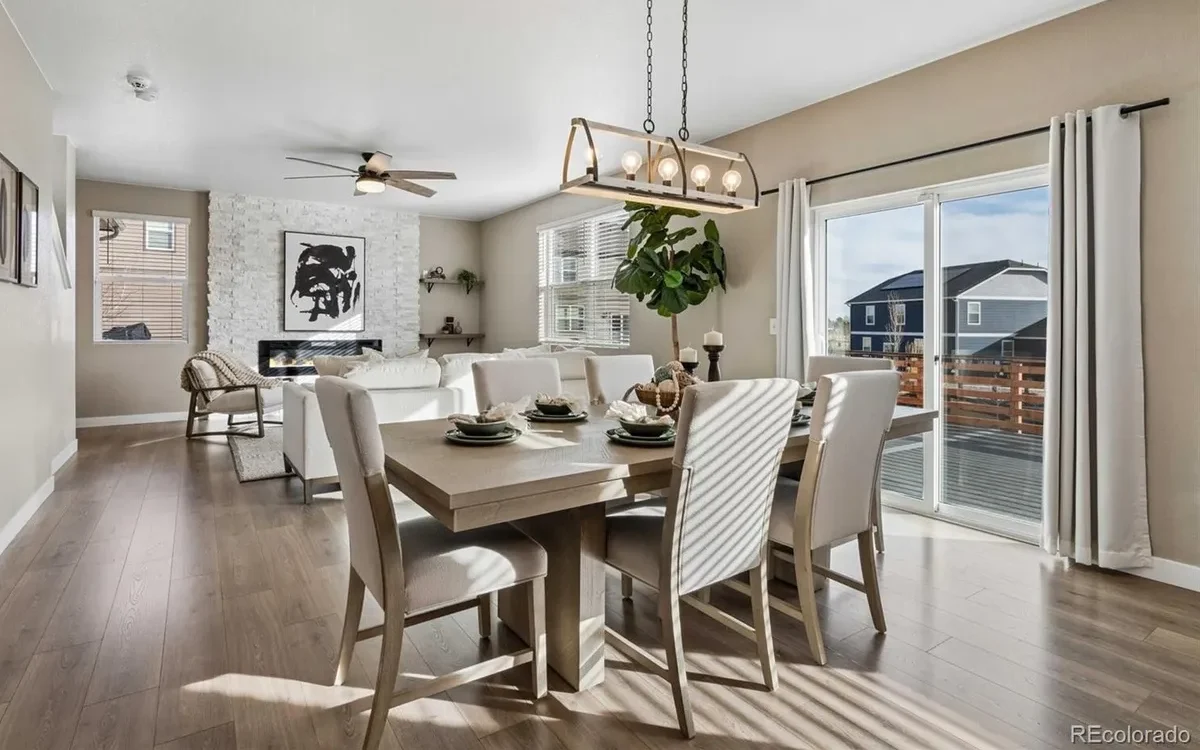
Picture this: A buyer pulls up your listing on their phone at 10pm. They’re scrolling. They land on your home — beautiful bones, great neighborhood, solid price. Then they swipe through the photos.
Empty living room. Empty bedroom. Empty dining room.
They keep scrolling.
It’s not that they couldn’t imagine the space. It’s that imagination is work, and buyers aren’t looking to work. They’re looking to feel something. And empty rooms don’t make people feel much of anything.
The psychology of empty spaces
Here’s something counterintuitive: vacant rooms actually look smaller than furnished ones. Without furniture to create scale and context, buyers can’t accurately gauge how a space functions — or whether their life will fit inside it. Every scuff on the wall becomes the main character. Every echo feels a little cold.
Over 41% of top real estate agents believe vacant homes benefit the most from professional staging [The Zebra] — and it makes sense. An occupied home at least has context. A vacant home is a blank canvas that most buyers simply aren’t equipped to paint.
According to the NAR’s 2025 Profile of Home Staging, 48% of agents reported that buyers now expect properties to look like the staged homes they see on television — and 58% said buyers were disappointed when homes didn’t meet those expectations. [Kinneyandrenwickteam] Fair or not, that’s the bar.
What the data says
The numbers on staging are hard to argue with. Nearly half of sellers’ agents observed that staging reduced the time their listings spent on the market, according to NAR’s 2025 Profile of Home Staging. [National Association of REALTORS] And data from the Real Estate Staging Association shows that staged homes sell 88% faster than vacant, unstaged ones.
In a Denver market where homes are averaging nearly two months to go under contract, that kind of acceleration isn’t a luxury — it’s a strategy.
Staged homes spend an average of 32 days on the market, compared to 143 days for unstaged homes. [milehimodern] Every extra month a home sits costs the seller in carrying costs — mortgage, utilities, insurance — not to mention the psychological weight of a listing that just… lingers. In many cases, staging is simply the cheaper alternative to a price reduction.
What professional staging actually looks like
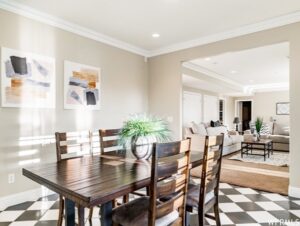
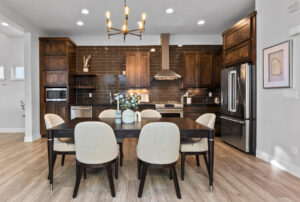
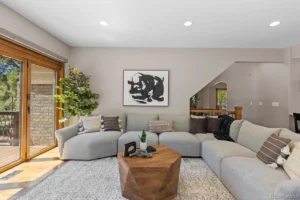
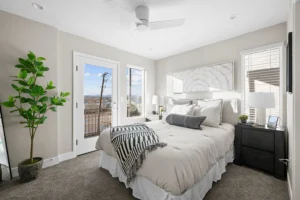
At STS Home Staging, we don’t drop in a random sofa and call it a day. Our team approaches every vacant home the way a good director approaches a set — with intention. We think about who the likely buyer is, what lifestyle they’re dreaming of, and how to make every room tell that story the moment they walk through the door.
We bring in fresh, modern furnishings curated specifically for the home’s architecture, layout, and price point. We think about sightlines from the entryway. We think about how natural light hits at noon when the showing is scheduled. We think about the small details — the layered textures, the artwork, the finishing touches — that make a buyer slow down instead of moving on.
The result? Homes that photograph beautifully, show even better in person, and give buyers exactly what they came for: the feeling of home.
The 8-week advantage
One thing that sets STS apart: our staging contracts include 8 weeks — where many staging companies offer only 30 days. In a balanced Denver market where homes need a little more runway, that matters. Your listing stays fresh and fully staged while buyers take their time making decisions. No scrambling to extend. No furniture disappearing mid-showing season.
Ready to see what staging does for your listing? We’d love to walk through your space.
VIEW OUR STAGING PORTFOLIO — and see the difference a great stage makes.
STS Home Staging is more than staging. — We’re your detail-obsessed design team for home furnishings and turnkey interiors. Our trade access means we deliver design services that often pay for themselves through wholesale savings.